


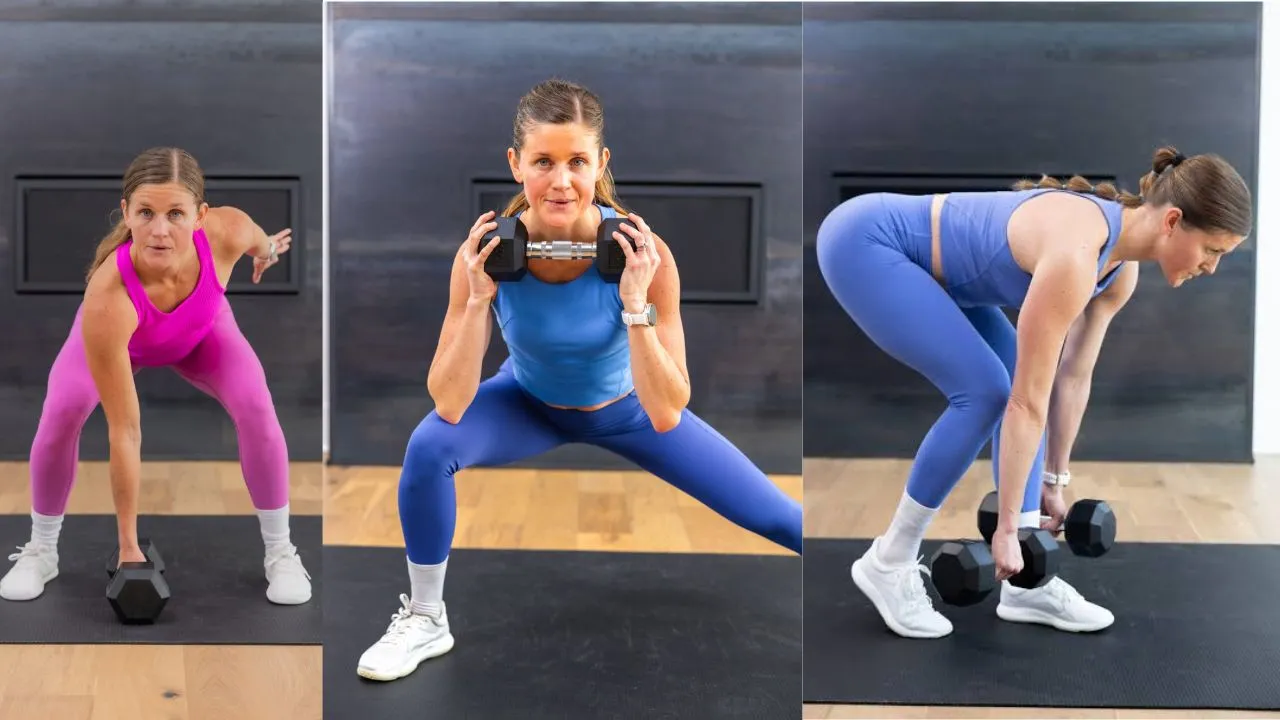
Getting started with exercise can feel like a big step. You might think you need to go to a gym or buy expensive machines. You might think you need a lot of free time each day. This is not the case. You can get a great workout right in your living room. All you need is twenty minutes and a set of weights. This guide is made for people who are new to working out. It walks you through each move step by step. You will learn how to do a complete workout safely. By the time you finish reading, you will know exactly what to do. Let us begin 20 minute full body workout with weights for beginners at home.
Why This Plan Works For New Lifters?
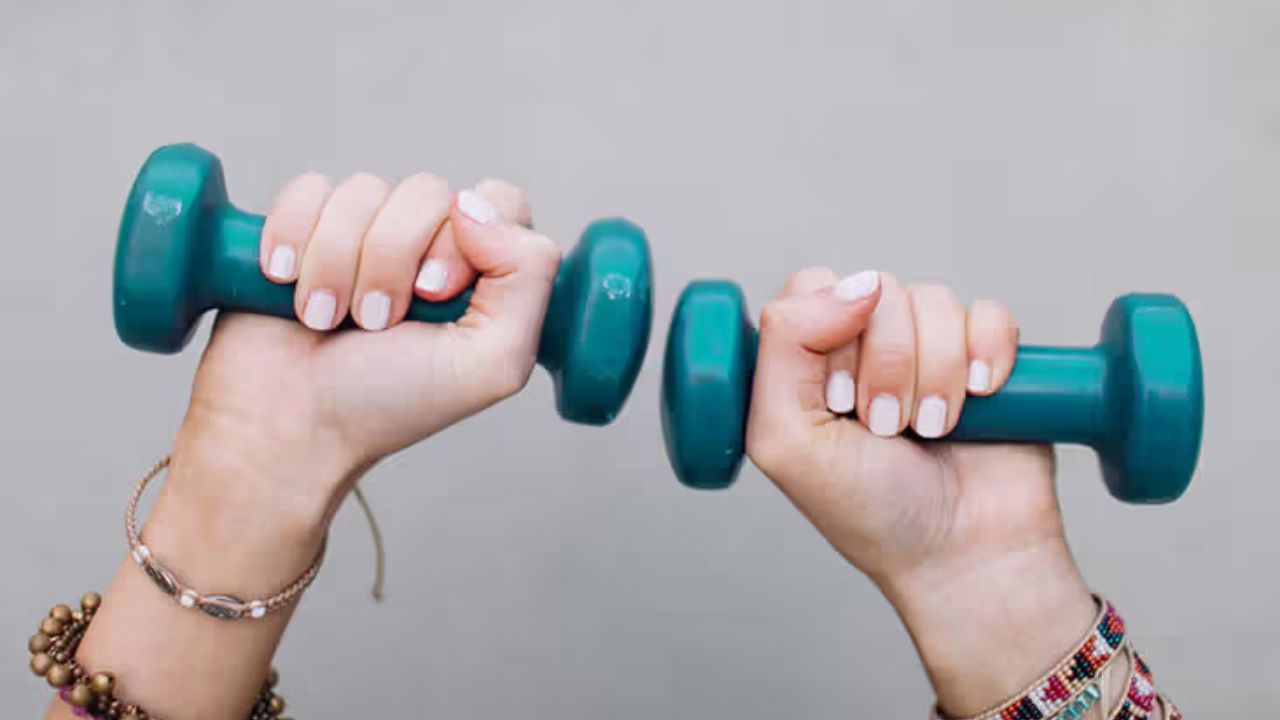
This routine is built for beginners. Every move is straightforward. You do not have to learn complicated footwork or sequences. The exercises are basic weight lifting moves that have been used for decades. They work because they target large muscle groups at the same time. This means you get more done in less time.
The twenty minute length is perfect for someone just starting out. It gives you enough time to challenge your muscles without wearing you out completely. You can fit this into your morning before work. You can do it during your lunch break. You can do it after dinner while watching television. The shorter time makes it easier to stay consistent.
Working out at home removes many common roadblocks. There is no commute to the gym. There is no waiting for equipment. There is no membership fee. You can roll out of bed and start moving. This convenience helps you stick with your routine long term.
Using weights adds resistance to each movement. Resistance training helps build stronger muscles. It also boosts your metabolism. You burn more calories even when you are not working out. You do not need heavy weights to get these benefits. Light weights work just fine when you are beginning. You can even use household items if you do not have dumbbells.
Read Also: Bodyweight Workout For Small Spaces
Items You Need To Get Ready
You do not need much equipment for this workout. Here is what to gather before you start.
You will need a pair of weights. Dumbbells are the best option. If you do not own dumbbells, look around your home. You can use two heavy books. You can use large water bottles filled with water. You can use a backpack filled with books or canned goods. The weight should be heavy enough that you feel your muscles working. It should not be so heavy that you cannot keep good form. Start with three to five pounds in each hand. You can move up to heavier weight later.
You will need a mat or a padded floor space. This is for exercises where you kneel or lie down. A yoga mat works well. A carpeted area works too. You can fold a thick towel and use that as your mat.
You will need comfortable clothing. Choose clothes that let you bend and stretch freely. Athletic wear is best but not required. You should wear shoes with good grip. This helps you stay steady during standing moves. Slippery socks are not a good choice.
You will need water nearby. Fill a bottle and place it where you can reach it easily. Take small drinks during the rest periods.
You will need a timer. Each exercise lasts forty seconds. Then you rest for twenty seconds. A phone timer works great. You can also use a kitchen timer or a stopwatch.
Safety Rules To Follow
Lifting weights carries some risk if you do not do it correctly. Follow these rules to stay safe.
Warm up before every workout. This is not optional. Cold muscles are more likely to get hurt. A warm up gets blood moving through your body. It prepares your joints and muscles for work. We will cover a warm up routine in the next section.
Pick weights that are right for you. Many beginners pick weights that are too heavy. This ruins your form. Bad form leads to injury. It is much better to use lighter weights and do the moves perfectly. You can always increase weight later.
Pay attention to your body position. Keep your back straight during standing moves. Keep your belly tight. Move at a steady pace. Do not swing the weights. Swinging means you are using momentum instead of muscle strength. This makes the exercise less effective and more dangerous.
Stop if you feel pain. There is a difference between muscle burn and sharp pain. Muscle burn feels like your muscles are working hard. Sharp pain is a warning sign. If something hurts in a bad way, stop and rest. It is okay to take extra rest breaks.
Breathe the right way. Many people hold their breath when lifting. This is not good. Breathe out when you push or lift the weight. Breathe in when you lower the weight. Good breathing gives your muscles oxygen. It also helps you stay calm during hard moves.
Warm Up Routine
Do these warm up moves before you touch any weights. The whole warm up takes about five minutes.
Start with marching in place. Lift your knees high. Swing your arms back and forth. Do this for one minute. This gets your heart rate up.
Next do arm circles. Stand with your feet apart. Hold your arms straight out to the sides. Make small circles forward. Keep going for thirty seconds. Then switch to circles going backward. Do that for thirty seconds.
Now do torso twists. Stand with feet apart. Place your hands on your hips. Twist your upper body to the right. Twist to the left. Move gently. Do not force the twist. Keep doing this for one minute.
Next do air squats. Stand with feet apart. Lower your body down like you are sitting in a chair. Stand back up. Do this ten times. Move slowly. Feel your leg muscles working.
Finally do arm swings. Stand with feet apart. Swing both arms forward and upward. Then swing them back down and behind you. Keep a natural rhythm. Do this for one minute.
Your body should feel warmer now. You are ready for the main workout.
The Main Workout
This workout has seven different moves. You do each move for forty seconds. Then you rest for twenty seconds. After you finish all seven moves, you rest for one full minute. Then you do all seven moves again. This gives you two rounds total. The whole thing takes about twenty minutes.
Each move targets different parts of your body. Some moves work several muscle groups at once. This makes the workout efficient and effective.
Let us go through each move in detail.
Move One - Squat With Shoulder Press
This move works your legs and shoulders together. It is a great way to start your workout.
Hold your weights at shoulder height. Your palms should face forward. Your elbows should point down toward the floor. Stand with your feet about shoulder width apart. Keep your chest lifted. Keep your back straight.
Lower your body into a squat. Go down like you are sitting back into a chair. Put your weight into your heels. Do not let your knees push forward past your toes. Go down until your thighs are level with the floor. If you cannot go that low, go as low as you comfortably can.
Push through your heels to stand up. As you stand, push the weights straight up over your head. Lock your arms out at the top. Keep your belly tight. Bring the weights back down to your shoulders. That is one full move.
Keep going for forty seconds. Go at a pace that feels right. Focus on doing the move correctly rather than doing it fast.
Move Two - Bent Over Row
This move targets the muscles in your upper back. It also works your arms and shoulders.
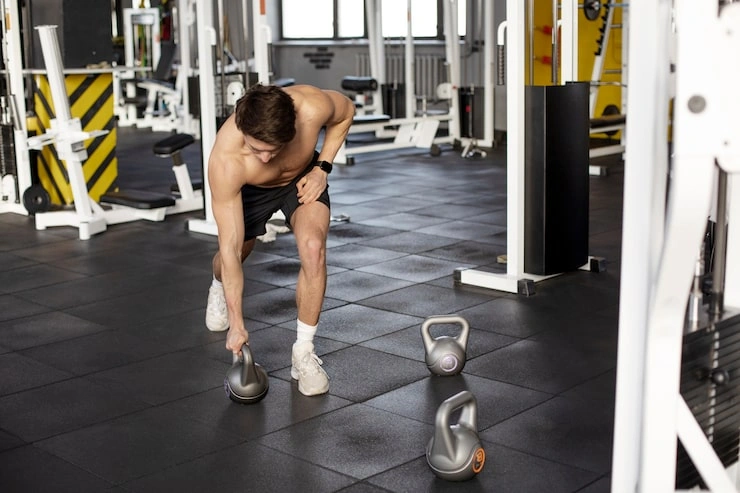
Hold a weight in each hand. Stand with your feet shoulder width apart. Bend your knees just a little. Hinge forward at your hips. Keep your back completely straight. Let your arms hang down toward the floor. Your palms should face each other.
Pull the weights up toward the sides of your chest. Keep your elbows tucked in close to your body. Squeeze your shoulder blades together at the top. Hold for a moment. Lower the weights back down slowly.
Your back must stay straight during this move. Do not round your back. Keep your belly tight. Move at a controlled pace.
Do this for 20 minute full body workout with weights for beginners at home.
Move Three - Deadlift
This move works your lower back, glutes, and back of your legs. It is one of the most effective strength moves you can do.
Stand with your feet hip width apart. Hold your weights in front of your thighs. Your palms should face your body. Keep your back straight. Keep your chest lifted.
Bend forward at your hips. Keep your knees slightly bent. Lower the weights down along the front of your legs. Keep the weights very close to your body. Go down until you feel a stretch in the back of your legs. Do not let your back round.
Push through your heels to stand back up. Squeeze your glutes at the top of the move. Keep your belly tight. That is one rep.
Move slowly through this exercise. Your back position is very important. Keep it straight the whole time.
Do this for forty seconds.
Move Four - Chest Press
This move works your chest, shoulders, and back of your arms. It is a classic weight lifting move.
Lie down on your back on your mat. Hold a weight in each hand. Bend your elbows at a ninety degree angle. Hold your arms out to the sides. Your upper arms should rest on the floor. Your palms should face forward.
Push the weights straight up over your chest. Press through your chest muscles. Lock your arms out at the top. Pause for just a moment. Lower the weights back down slowly. Return to the starting position with your elbows at ninety degrees.
Keep your back flat against the floor. Keep your belly tight. Do not arch your back. Move with control.
Do this for forty seconds.
You May Also Like: Fat Burning Workout For Remote Employees
Move Five - Reverse Lunge With Arm Curl
This move works your legs and the front of your arms. It combines two moves into one smooth motion.
Stand with your feet together. Hold a weight in each hand. Let your arms hang down at your sides. Your palms should face forward.
Step backward with your right foot. Lower your body into a lunge. Your front knee should bend to ninety degrees. Your back knee should hover just above the floor. At the same time, curl the weights up toward your shoulders. Squeeze the front of your arms at the top.
Push through your front heel to stand back up. Lower the weights back down. Return to the starting position. That is one rep. Next time step back with your left foot. Keep alternating sides.
Keep your chest lifted. Keep your belly tight. Move at a steady pace.
Do this for forty seconds.
Move Six - Side Lunge With Arm Raise
This move works your legs and shoulders. It also targets your inner and outer thighs.
Stand with your feet together. Hold a weight in each hand. Let your arms hang down at your sides. Your palms should face your body.
Step out to the right with your right foot. Bend your right knee. Keep your left leg straight. Lower your body into a side lunge. At the same time, raise your arms out to the sides. Raise them up to shoulder height. Keep a small bend in your elbows.
Push through your right foot to come back to center. Lower your arms back down. That is one rep. Next time step out to the left. Keep alternating sides.
Keep your chest lifted. Keep your back straight. Move with control.
Do this for forty seconds.
Move Seven - Plank With Row
This move works your core, back, and arms. It is the hardest move in the workout.
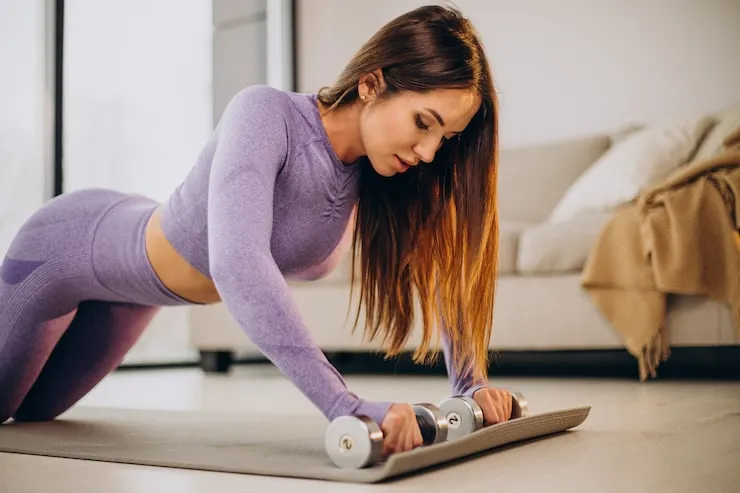
Start in a plank position. Place your hands on the floor directly under your shoulders. Your body should make a straight line from your head to your heels. Hold a weight in each hand.
Keep your belly tight. Keep your back flat. Do not let your hips drop down or push up. Pull your right elbow up toward the ceiling. Bring the weight up to the side of your chest. Keep your elbow close to your body. Lower the weight back down. Repeat with your left arm.
This move is tough. You can drop down to your knees if you need to. Just keep your body in a straight line from your knees to your head.
Do this for forty seconds.
Workout Structure Recap
Here is the order of the workout.
Do move one for forty seconds. Rest for twenty seconds. Do move two for forty seconds. Rest for twenty seconds. Do move three for forty seconds. Rest for twenty seconds. Do move four for forty seconds. Rest for twenty seconds. Do move five for forty seconds. Rest for twenty seconds. Do move six for forty seconds. Rest for twenty seconds. Do move seven for forty seconds. Rest for twenty seconds.
Now rest for one full minute. Start the same sequence again from move one. Do all seven moves again. Rest between each move. That is your full workout.
The total time is about twenty minutes including all the rest periods.
Cool Down Stretches
- Cooling down helps your body recover. It brings your heart rate down slowly. It also helps prevent soreness.
- Take about three minutes to stretch after you finish the workout.
- Reach your arms up over your head. Stretch toward the ceiling. Hold for twenty seconds.
- Bend forward and reach for your toes. Keep your knees slightly bent. Hold for twenty seconds.
- Stretch your chest by clasping your hands behind your back. Pull your hands down and back. Hold for twenty seconds.
- Stretch your shoulders by pulling one arm across your chest. Hold with your other arm. Do both sides.
- Walk around slowly for a minute. Take deep breaths. Drink some water.
- Your body has worked hard. Give it time to settle down.
Mistakes That Beginners Often Make
Knowing what to avoid is just as important as knowing what to do.
Using weights that are too heavy is the number one mistake. Heavy weights make you lose control. You start using bad form. Bad form leads to injury. Always start lighter than you think you need.
Rushing through the moves is another common mistake. Fast moves rely on momentum. Momentum does not build muscle as well as slow controlled moves. Slow down and feel your muscles working.
Forgetting to breathe happens to many people. Holding your breath makes the exercise harder in a bad way. It can also raise your blood pressure. Breathe out on the hard part. Breathe in on the easy part.
Skipping the warm up is a big risk. Your muscles need to be warm before they work hard. The warm up only takes five minutes. Do not skip it.
Rounding your back is a problem in many moves. This happens most often in squats, deadlifts, and rows. Focus on keeping your back flat. Keep your chest lifted. This protects your spine.
How Many Times Per Week Should You Do This?
For someone just starting out, two or three times per week is enough. Your muscles need time to recover between sessions. Recovery is when your muscles repair and get stronger.
A good plan is to do this workout on Monday, Wednesday, and Friday. Take Tuesday, Thursday, Saturday, and Sunday off. On your off days you can do light walking or gentle stretching. This keeps you active without overworking your muscles.
After a few weeks you might feel ready to do more. You can add a fourth day if you want. Listen to your body. If you feel very tired or sore, take an extra rest day.
How To Get Stronger Over Time?
Your body adapts to exercise. What feels hard today will feel easier in a few weeks. To keep making progress you need to increase the challenge.
Add more weight. When your current weights feel light, add one or two pounds. Small increases are best. Jumping up too much can hurt your form.
Add more time. Do each move for forty five seconds instead of forty. Work up to fifty seconds. This adds more work without changing the moves.
Add more reps. Try to fit more reps into the same forty seconds. Move a little faster. But only if your form stays good.
Add a third round. Instead of two rounds, do three. This makes the workout longer and harder.
Make one change at a time. Give your body time to adjust. Do not change everything at once.
What To Eat Around Your Workout?
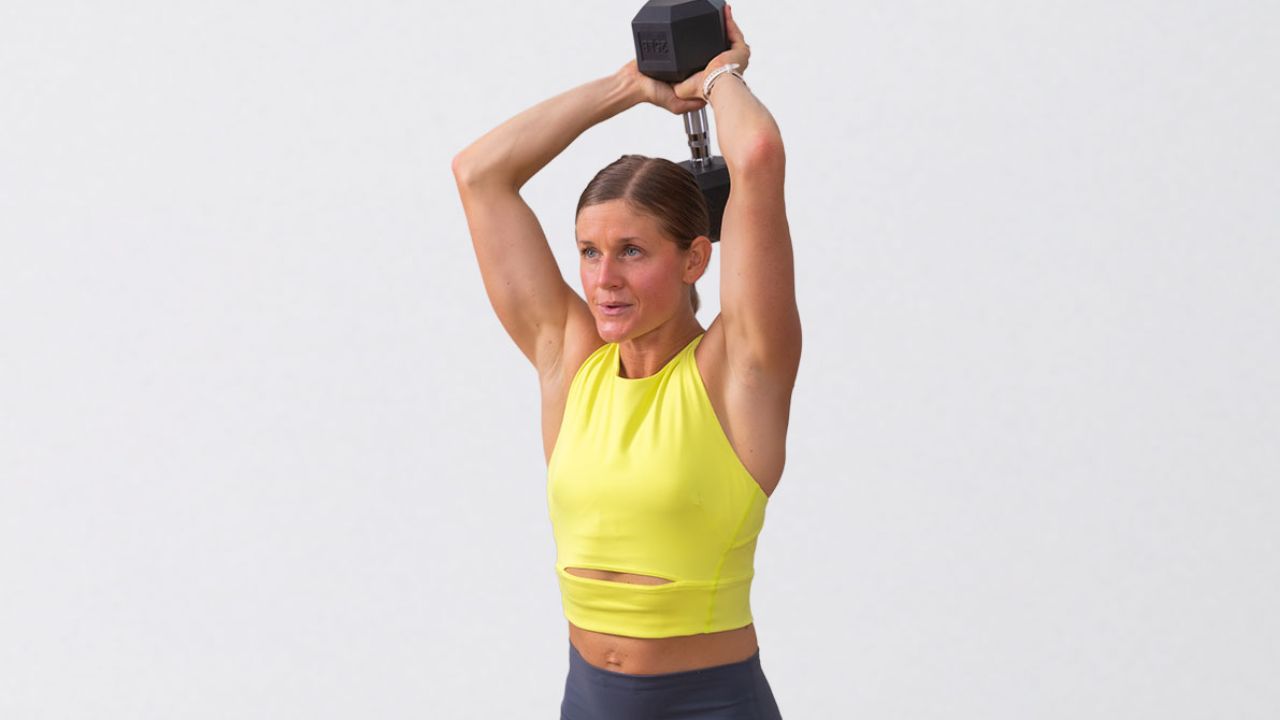
Food gives you energy to exercise. Food also helps your muscles recover.
Before your workout, have a small snack. Eat it about thirty to sixty minutes before you start. Good snacks include a banana, an apple, a piece of toast with peanut butter, or a small yogurt. Do not eat a heavy meal. A heavy meal will make you feel sluggish.
After your workout, eat within one hour. Your muscles need protein to repair. They need carbohydrates to refuel. Good post workout meals include Greek yogurt with fruit, eggs with toast, a protein shake, or chicken with rice.
Drink water before you start. Drink water during the rest periods. Drink water after you finish. Staying hydrated helps you perform better and recover faster.
Benefits Of This Workout
This workout offers many benefits beyond just building muscle.
You will get stronger. Your muscles will adapt to the weight. Everyday tasks will feel easier. Carrying groceries, lifting children, and moving furniture will all become less tiring.
You will burn more calories. Weight lifting boosts your metabolism. Your body keeps burning calories for hours after you finish. This helps with weight management.
Your bones will get stronger. Lifting weights puts stress on your bones. This stress triggers your bones to build more density. Stronger bones protect you from fractures as you get older.
Your balance will improve. Many of these moves challenge your core and stabilizer muscles. Better balance helps you in daily life. It also reduces your risk of falls.
Your mood will get better. Exercise releases chemicals in your brain that make you feel good. You will feel less stress and more energy. Many people find they sleep better on days they exercise.
FAQs
Can I do this without weights?
Yes. The moves still work your muscles without any weight. You will not build as much strength as you would with weights. But you will still get a solid workout. You can add weights later when you are ready.
What if I cannot do a move?
That is fine. Change the move to fit your level. Do squats without weights. Do the plank row on your knees. Do the chest press with lighter weight or no weight. Doing an easier version is better than skipping it.
How can I check my form?
Use a mirror. Watch yourself as you move. Focus on your back position. Keep it straight. Keep your belly tight. You can also record a short video on your phone. Compare your form to proper form videos online.
What weight should I start with?
Start with three to five pounds per hand. This is a safe starting point for most beginners. Do the moves with these weights. If it feels too easy, add a little weight. If it feels too hard, go lighter. Good form always comes first.
Should I do other exercise too?
This workout gives you strength training. It also provides some cardio because the rest periods are short. You can add walking, jogging, or cycling on your off days. Start with two days of this workout and two days of cardio.
How long until I see results?
Everyone is different. Many people notice changes in four to six weeks. You might feel stronger first. You might notice your clothes fit better. Stay consistent and be patient. Results come with time.
Can I do this if I have health problems?
Talk to your doctor first. This is very important if you have heart issues, joint problems, or other health conditions. Start with very light weights or no weights. Focus on form. Stop if anything hurts.
Conclusion
Starting a new workout routine can feel like a lot. But this plan makes it simple. You need twenty minutes. You need a set of weights. You need a small space in your home. That is all. Do the warm up. Do the seven moves. Rest between each move. Do all seven moves again. Cool down with stretches. Do this two or three times per week.
Be consistent. Consistency matters more than perfection. Some days you will feel great. Other days you will feel tired. Show up anyway. Do what you can. Every workout counts. Be patient with yourself. Strength takes time to build. You are learning new skills. Your body is adapting. Give yourself credit for showing up.