



Most workout advice assumes you have an hour to spare and energy left over. Busy professionals rarely get either. The routines below are built for the reality of back-to-back meetings, commutes, and days that slip away. You do not need a gym membership to start. You do not need to rearrange your entire schedule. You need twenty minutes and a clear plan.
This guide gives you three routines you can rotate through a week, a schedule that fits around work, and the specific habits that keep people consistent when motivation drops. Every exercise listed requires no equipment beyond a chair or a wall.
Why Short Workouts Work Better Than You Think?

The biggest mistake busy people make is waiting for the perfect window. A free hour appears on the calendar, something urgent lands, and the workout disappears. Research on exercise adherence consistently shows that shorter sessions are easier to repeat, and repetition matters more than duration for building a habit .
Short sessions also solve a physiological problem. When you sit for most of the day, your hips tighten, your upper back rounds forward, and your glutes stop firing. A focused twenty-minute routine that targets these issues does more for how you feel at your desk than a random hour of machines at a gym.
The routines below prioritize movements that use multiple muscle groups at once. A push-up works your chest, shoulders, and core. A squat works your legs and back. You get more done in less time because every exercise earns its place.
The 20-Minute Full Body Routine (No Equipment)
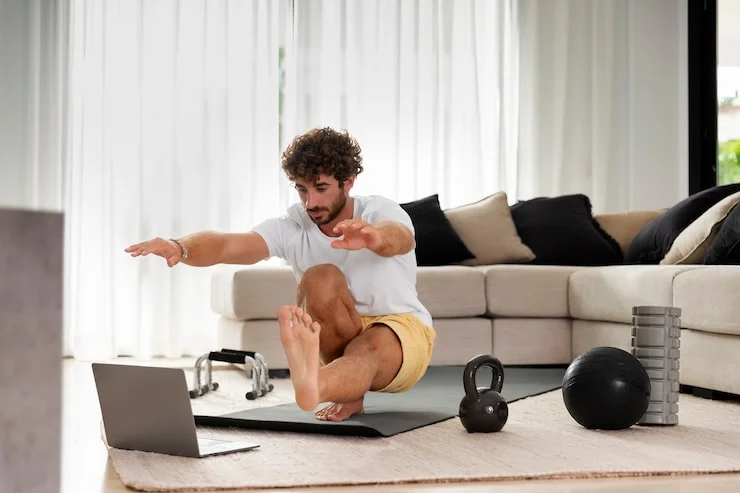
This is your default workout. Do it on days when you have exactly twenty minutes and nothing else. Move from one exercise to the next with minimal rest. Complete the circuit three times.
Warm-up (3 minutes): March in place for one minute. Circle your arms forward for thirty seconds, then backward for thirty seconds. Do ten slow bodyweight squats. Roll your daily workout routine for busy professionals.
Circuit (repeat three times):
Bodyweight Squats — 12 reps. Stand with feet shoulder-width apart. Push your hips back like you are sitting into a chair. Keep your chest up. Go as low as comfortable. If your knees bother you, reduce the depth.
Push-Ups — 8 to 12 reps. Hands under shoulders. Keep your body in a straight line from head to heels. If full push-ups are too hard, put your hands on a sturdy desk or counter and do them at an incline. If they are too easy, lower your chest closer to the floor.
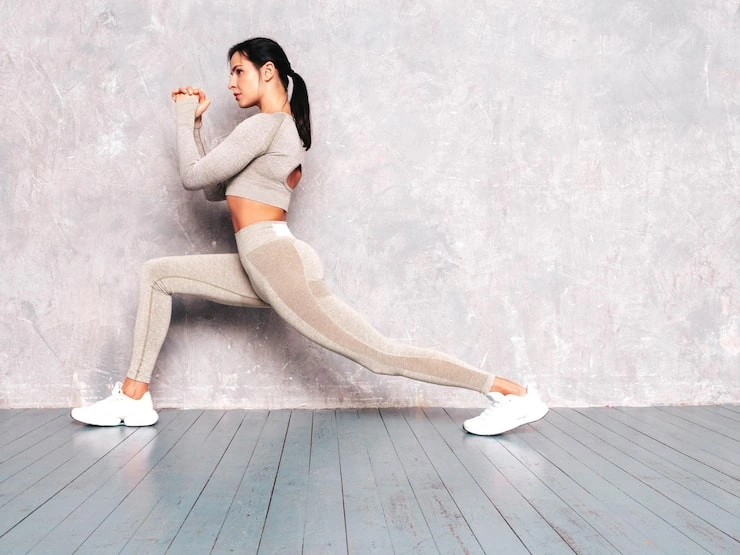
Reverse Lunges — 8 per leg. Step backward, lower your back knee toward the floor, then push through your front foot to stand. Hold a wall for balance if needed.
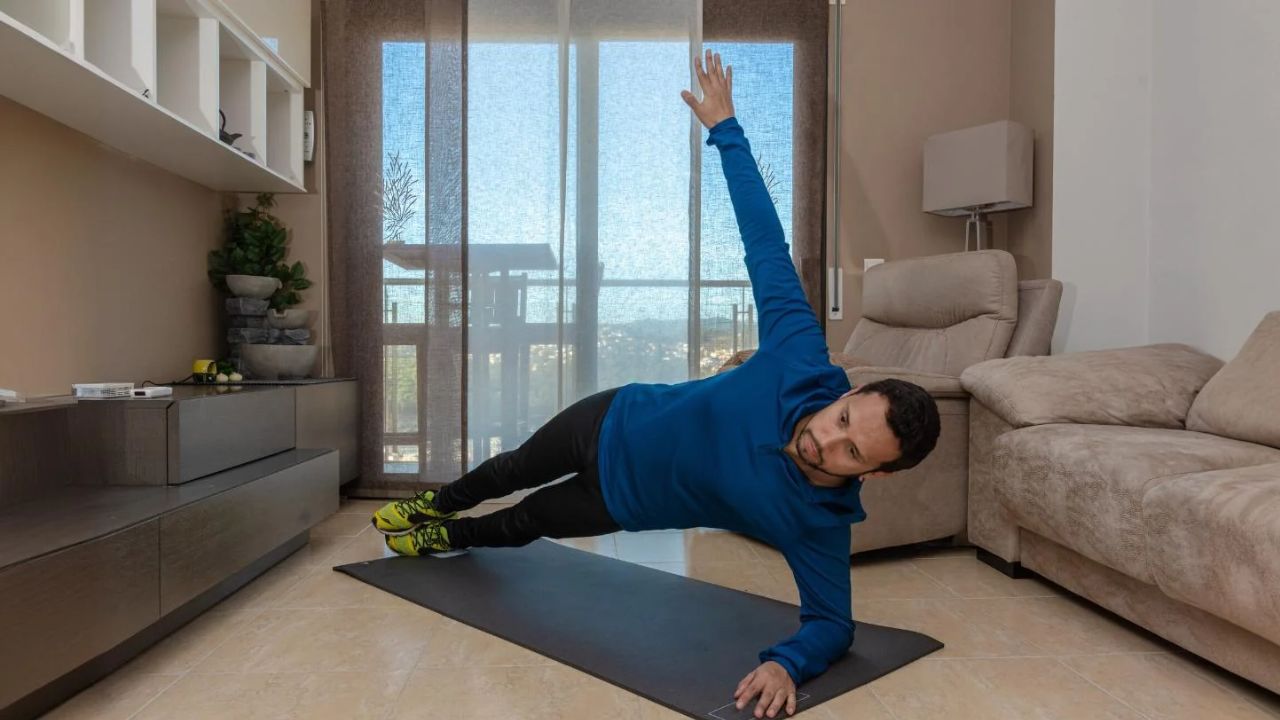
Plank — 20 to 40 seconds. Forearms on the floor, elbows under shoulders. Squeeze your glutes and keep your hips level. Stop when your lower back starts to sag.
Glute Bridges — 12 reps. Lie on your back, knees bent, feet flat. Push through your heels to lift your hips. Squeeze at the top for one second.
Cool-down (2 minutes): Stand and take five slow breaths. Reach your arms overhead and lean gently to each side. Shake out your legs.
That is it. Twenty minutes, no equipment, and every major muscle group gets attention.
Read Also: Full Body Dumbbell Workout For Beginners
The 15-Minute Desk Break Routine
Some days you cannot leave your desk for twenty minutes straight. This routine fits into two seven-minute breaks, or one fifteen-minute window between calls. It targets the areas that suffer most from sitting: hips, upper back, and neck.
Minute 1–3: Hip Openers. Stand and do ten slow squats. Then step your right foot forward into a lunge and hold for twenty seconds. Switch sides. Repeat twice.
Minute 4–6: Upper Back. Sit tall in your chair. Place your hands behind your head and gently press your shoulder blades together. Hold for five seconds, release. Do ten reps. Then reach your arms forward, clasp your hands, and round your upper back. Hold for fifteen seconds. Repeat three times.
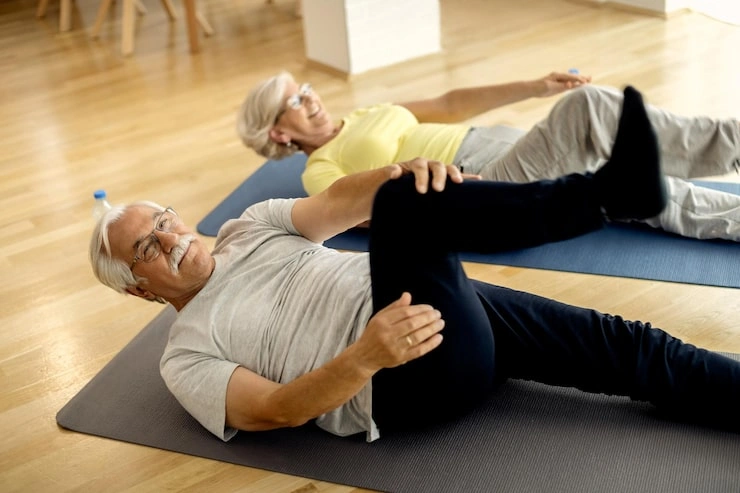
Minute 7–9: Core and Glutes. Stand and do ten standing knee-to-elbow crunches on each side. Then do fifteen glute squeezes in your chair. Hold each squeeze for three seconds.
Minute 10–12: Shoulders and Neck. Shrug your shoulders up to your ears, hold for three seconds, release. Do ten reps. Then slowly turn your head left and right five times each way. Do not roll your neck backward.
Minute 13–15: Reset. Stand and take ten slow breaths. Reach your arms overhead and stretch. Roll your shoulders back five times.
This routine will not build significant strength. It will keep you from feeling stiff and sluggish after a long day of meetings. Use it on days when a full workout is not possible.
The 25-Minute Strength Routine (One Dumbbell or Water Bottle)
If you have a single dumbbell, a kettlebell, or even a heavy water bottle, you can add resistance to the basic movements. This routine builds more strength than the bodyweight circuit and still fits into a lunch break.
Warm-up (3 minutes): Same as the full body routine.
Circuit (repeat three times):
Goblet Squats — 10 reps. Hold the weight at your chest with both hands. Squat down between your knees. Keep your chest tall.
Single-Arm Rows — 10 per arm. Place one hand on a chair or desk. Hinge forward at the hips. Hold the weight in your free hand and pull it toward your hip. Lower slowly.
Overhead Press — 8 to 10 reps. Hold the weight at shoulder height with both hands. Press it overhead until your arms are straight. Lower with control.
Romanian Deadlifts — 10 reps. Hold the weight in front of your thighs. Push your hips back and slide the weight down your legs. Stop when you feel a stretch in your hamstrings. Stand back up by squeezing your glutes.
Farmer Carry — 30 to 45 seconds. Hold the weight in one hand and walk slowly around the room. Keep your shoulders level. Switch hands halfway through.
Cool-down (2 minutes): Same as the daily workout routine for busy professionals.
How to Fit These Into a Real Week?
The mistake is trying to do too much too soon. If you have not exercised regularly, start with three workouts in week one. Pick the twenty-minute routine on Monday, Wednesday, and Friday. Use the desk break routine on Tuesday and Thursday if you feel stiff, but treat those as optional.
A realistic week looks like this:
- Monday: 20-minute full body routine
- Tuesday: 15-minute desk break routine (optional)
- Wednesday: 20-minute full body routine
- Thursday: Rest or a short walk
- Friday: 25-minute strength routine (if you have a weight) or the 20-minute routine again
- Saturday: Rest or something enjoyable like a longer walk or bike ride
- Sunday: Rest
The key is not the specific days. The key is having a default. When you wake up on Monday, you already know what you are doing. Decision fatigue is the enemy of consistency. Remove the decision by planning the week on Sunday evening.
The Habits That Actually Keep People Consistent
Do it before you check your phone. The first ten minutes of your morning set the tone for the day. If you open email first, you are reacting to other people's priorities. If you do a ten-minute version of the workout first, you have already done something for yourself. Even a shortened version counts.
Keep your workout clothes visible. Leave them on a chair or at the foot of the bed. The friction of finding clothes is enough to derail a workout on a low-energy day. Remove the friction.
Use the two-minute rule. On days when you truly cannot face a full session, commit to two minutes. Do ten squats and five push-ups. If you want to stop after that, stop. Most days, you will keep going once you start. The hardest part is starting.
Track completion, not intensity. A calendar with a checkmark for each completed session is more motivating than a complicated fitness app. You are building the identity of someone who exercises, not training for a competition. The identity comes from repetition.
Accept the fifteen-minute version. A fifteen-minute workout done is infinitely better than a sixty-minute workout skipped. Busy professionals often fall into an all-or-nothing mindset. The person who does fifteen minutes three times a week will see more progress over three months than the person who plans hour-long sessions and completes four of them.
You May Also Like: Low Impact Cardio Workout For Beginners
What to Do When You Travel?
Hotel rooms and unfamiliar cities disrupt routines. Keep a travel version of the workout that requires nothing.
Do this circuit three times in your hotel room: ten squats, eight push-ups (feet on the floor, hands on the bed if needed), ten reverse lunges, twenty-second plank, ten glute bridges. It takes twelve minutes. You can do it before a conference session or after dinner.
Walking is also underrated. A brisk twenty-minute walk before breakfast does not build much strength, but it maintains the habit of moving daily. When you return home, you pick up where you left off instead of starting over.
Conclusion
You will not see dramatic physical changes in two weeks. What you will notice first is how you feel at the end of the workday. Less stiffness in your lower back. Less tension in your shoulders. A bit more energy in the afternoon. Those changes are the foundation. Strength and visible changes follow months of consistent practice, not days.
The professionals who stick with exercise are not the ones with the most free time. They are the ones who decided that fifteen minutes of movement is non-negotiable, the same way a meeting with a client is non-negotiable. They built a default routine and protected it.