
Starting a workout routine feels hard. Your body is not used to moving in certain ways. Your joints might hurt. Your muscles might feel weak. You might worry about getting hurt. These feelings are normal. They happen to almost everyone who starts exercising.
Low impact workouts solve these problems. They protect your joints. They build strength slowly. They give your body time to adjust. This makes them perfect for low impact workout for beginners at home.
Many people think exercise must be hard to work. They think you need to jump around. They think you need to run fast. This is not true. Low impact workouts give you great results without the pain. Your heart gets stronger. Your muscles grow. Your balance improves. All of this happens without pounding your joints.
The best part is you can do these workouts at home. You do not need a gym membership. You do not need expensive equipment. You do not need to drive anywhere. Your living room floor works perfectly.
What Does Low Impact Actually Mean?
Low impact means one foot stays on the ground. When you walk, one foot is always down. When you run, both feet leave the ground at the same time. That is high impact. When you do a squat, both feet stay on the ground. That is low impact.
This difference matters for your body. High impact movements send force through your joints. Your knees absorb this force. Your ankles absorb this force. Your back absorbs this force. Over time, this force can cause pain. It can cause injury. It can make exercise feel awful.
Low impact movements keep this force low. Your joints do not take a beating. Your muscles do the work instead. This builds strength where you want it. It keeps pain away where you do not want it.
Low impact does not mean low intensity. You can work very hard without jumping. You can raise your heart rate. You can break a sweat. You can feel your muscles burn. All of this happens with your feet on the ground.
Read Also: 20 Minute Full Body Workout With Weights For Beginners At Home
Who Benefits From Low Impact Workouts?
Many people should start with low impact workouts. If you have not exercised in months, start here. If you have not exercised in years, definitely start here. Your body needs time to remember how to move.
People with joint problems benefit greatly. If your knees hurt when you walk stairs, low impact helps. If your hips feel stiff in the morning, low impact helps. If your back aches after standing too long, low impact helps. This style of exercise strengthens the muscles around your joints. Strong muscles protect weak joints.
Older adults find low impact workouts safe. Your bones get more fragile with age. High impact can cause fractures. Low impact builds bone density safely. It keeps you strong without the risk.
People with extra weight benefit too. Every pound puts pressure on your joints. Jumping adds even more pressure. Low impact removes that extra pressure. You can lose weight without hurting yourself.
Pregnant women often choose low impact. Their bodies change quickly. Their balance shifts. Their joints loosen. Low impact keeps them safe while staying active.
Even advanced athletes use low impact. They use it on rest days. They use it when recovering from injury. They use it to cross train. Low impact is not just for beginners. It works for everyone.
Equipment You Need To Get Started
You do not need much to start. This keeps things simple. This keeps things cheap. This removes excuses.
A yoga mat helps. It gives you cushion for your knees. It stops you from slipping on hard floors. You can buy one for a small amount of money. You can also use a thick towel. A carpet works too. Anything soft under your body helps.
Wear comfortable clothes. They should not be too tight. They should not be too loose. Tight clothes restrict movement. Loose clothes get in the way. Athletic wear works best. Regular t-shirts and shorts work fine too.
Shoes are important. Wear sneakers with good support. Flat soles do not work well. They do not cushion your feet. They do not support your arches. Good sneakers protect your feet. They protect your ankles. They protect your knees.
Keep water nearby. You will sweat. You will get thirsty. Drink when you need to. Do not wait until you feel dry. Small sips throughout work best.
A chair is useful. You can hold it for balance. You can sit on it for modified moves. You can use it for tricep dips. Any sturdy chair works. Make sure it does not slide.
Hand weights are optional. You can start without them. Your body weight gives enough resistance at first. Later you can add weights. Cans of food work as weights. Water bottles work too. Get creative with what you have.
Warming Up Before You Start
Warming up is not optional. Many beginners skip this part. They want to save time. They think it does not matter. This is a mistake.
Warming up does several things. It raises your body temperature. It sends blood to your muscles. It makes your joints move freely. It prepares your heart for work. It prevents injury. It makes your workout feel better.
Your warm up should last five minutes. This is not a long time. It makes a big difference. Do not skip it.
Start with gentle neck rolls. Drop your chin to your chest. Roll your head slowly to the right. Roll it back. Roll it to the left. Do this five times each direction. Keep the movement slow. Do not force anything.
Move to shoulder rolls. Shrug your shoulders up to your ears. Roll them back and down. Do this ten times. Then roll them forward ten times. This loosens your upper back. This helps with posture.
Arm circles come next. Hold your arms straight out to the sides. Make small circles forward. Do ten of these. Make small circles backward. Do ten of these. Make bigger circles forward. Do ten. Make bigger circles backward. Do ten.
Gentle twists help your spine. Stand with your feet hip width apart. Place your hands on your hips. Twist your upper body to the right. Look over your right shoulder. Twist to the left. Look over your left shoulder. Do ten on each side. Keep your hips facing forward.
March in place to finish. Lift your knees high. Pump your arms gently. Do this for two minutes. Breathe normally. Feel your body wake up.
Main Workout Moves
This section gives you seven moves. Each move works different muscles. Together they work your whole body. Do them in order.
Squats
Squats are the foundation of lower body strength. They work your thighs. They work your glutes. They work your core. They work your back.
Stand with your feet shoulder width apart. Point your toes slightly outward. Keep your chest up. Keep your shoulders back. Look straight ahead. Push your hips back. Lower your body like you are sitting in a chair. Go as low as feels good. Do not let your knees go past your toes. Push through your heels to stand back up. Squeeze your glutes at the top.
Do fifteen squats. Rest for thirty seconds. Do two more sets.
If this feels hard, hold onto a chair. Place a chair behind you. Lower until you lightly touch it. Stand back up. This gives you support. This lets you know how low to go.
If this feels easy, hold a weight to your chest. This adds resistance. This builds more strength. Only do this after you master the basic squat.
Knee Drives
Knee drives work your balance. They work your core. They work your hip flexors. They raise your heart rate.
Stand tall with your feet together. Place your hands on your hips. Lift your right knee up to hip height. Keep your standing leg slightly bent. Hold for one second. Lower your right foot back down. Lift your left knee up to hip height. Hold for one second. Lower your left foot back down.
Keep your core tight. Do not lean back. Do not swing your leg. Control the movement.
Do ten on each leg. Rest for thirty seconds. Do two more sets.
Hold onto a wall if you feel wobbly. Balance takes time to build. There is no shame in using support.
Push Ups On Knees
Push ups work your chest. They work your arms. They work your shoulders. They work your core. Full push ups are hard for beginners. Knee push ups give you the same benefits with less weight.
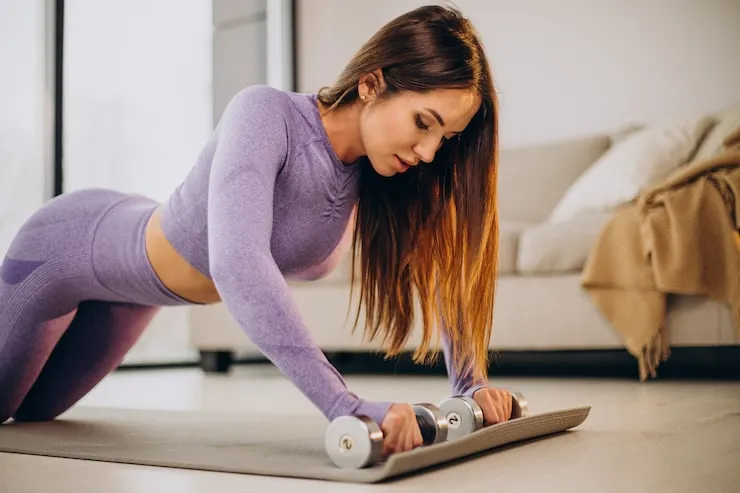
Kneel on your mat. Place your hands on the floor. Your hands should be wider than your shoulders. Walk your hands forward until your body is straight. Your knees stay on the floor. Your back stays flat. Your hips do not sag. Your butt does not stick up.
Bend your elbows. Lower your chest toward the floor. Go as low as you can. Push through your hands to go back up. Keep your body straight the whole time.
Do ten push ups. Rest for thirty seconds. Do two more sets.
If ten feels too hard, do five. If five feels too hard, do three. Build up slowly. Progress comes with time.
If this feels too easy, do full push ups. Keep your toes on the floor. Keep your body straight. Lower your chest to the floor. Push back up. This requires more strength.
Glute Bridges
Glute bridges wake up your glutes. Many people have weak glutes. They sit too much. Their glutes forget how to work. This move fixes that. Strong glutes protect your back. Strong glutes help you stand taller. Strong glutes make your legs look better.
Lie on your back on your mat. Bend your knees. Place your feet flat on the floor. Your feet should be hip width apart. Your arms rest at your sides. Press your feet into the floor. Lift your hips up toward the ceiling. Squeeze your glutes at the top. Hold for two seconds. Lower your hips back down. Do not let your hips touch the floor completely. Keep them hovering just above.
Do fifteen bridges. Rest for thirty seconds. Do two more sets.
To make this harder, place a weight on your hips. Hold it steady with your hands. Press up against the extra weight.
Bird Dogs
Bird dogs work your balance. They work your core. They work your back. They work your glutes. They coordinate your whole body.
Start on your hands and knees. Your hands go under your shoulders. Your knees go under your hips. Keep your back flat. Look at the floor. Tighten your core. Lift your right arm straight out in front of you. Lift your left leg straight out behind you. Keep your body stable. Hold for two seconds. Bring your arm and leg back to start. Switch sides. Lift your left arm and right leg. Hold for two seconds. Bring them back.
Do ten on each side. Rest for thirty seconds. Do two more sets.
If you feel wobbly, just lift your arm first. Then add the leg later. Build up slowly.
Side Lunges
Side lunges work your inner thighs. They work your outer thighs. They work your glutes. They improve lateral movement. Most people only move forward and backward. Side lunges help you move sideways too.
Stand with your feet together. Step your right foot out to the side. Keep your toes pointed forward. Bend your right knee. Keep your left leg straight. Push your hips back. Lower your body down. Keep your chest up. Press through your right heel to stand back up. Bring your right foot back to center. Step your left foot out to the side. Bend your left knee. Press through your left heel to stand back up.
Do ten on each side. Rest for thirty seconds. Do two more sets.
Do not let your knee go past your toes. This protects your knee joint. Keep your weight in your heel.
Standing Calf Raises
Calf raises work your lower legs. Strong calves help you walk better. Strong calves help you run better. Strong calves reduce foot pain.
Stand with your feet hip width apart. Hold onto a chair for balance. Press through the balls of your feet. Lift your heels off the floor. Go up onto your toes. Hold for two seconds. Lower your heels back down. Control the movement. Do not drop down fast.
Do twenty calf raises. Rest for thirty seconds. Do two more sets.
To make this harder, do them one leg at a time. Lift your right foot off the floor. Lift your left heel up. Lower it back down. Do ten. Switch feet. Do ten on the other side.
How To Put These Moves Together?
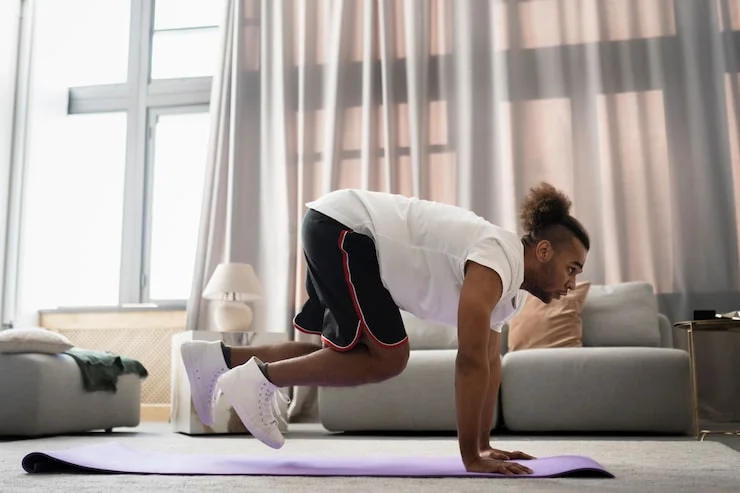
You have seven moves now. Doing them all in a row takes time. Doing them as a circuit saves time. It keeps your heart rate up. It burns more calories. It builds more endurance.
Here is a simple circuit to follow.
Round One
-
Squats - 15 reps
-
Knee Drives - 10 each side
-
Knee Push Ups - 10 reps
-
Glute Bridges - 15 reps
-
Bird Dogs - 10 each side
-
Side Lunges - 10 each side
-
Calf Raises - 20 reps
Rest for one full minute. Catch your breath. Drink some water. Get ready for low impact workout for beginners at home.
Round Two
-
Repeat all moves with the same reps
Rest for one full minute.
Round Three
-
Repeat all moves with the same reps
This circuit takes about twenty five minutes total. That includes your warm up and cool down. It gives you a complete workout in a short time.
Do this circuit three times per week. Do it on Monday. Do it on Wednesday. Do it on Friday. Rest on the other days. Rest is when your muscles rebuild. Rest is when you get stronger.
Cooling Down After Your Workout
Cooling down is as important as warming up. It brings your heart rate down slowly. It prevents blood from pooling in your legs. It stretches your muscles. It reduces soreness. It feels good.
Do these four stretches after every workout.
Hamstring Stretch
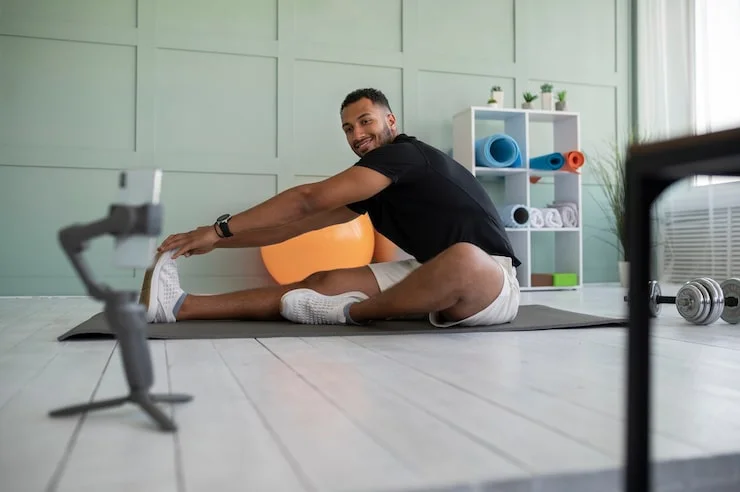
Sit on your mat. Extend your right leg straight out. Bend your left knee. Place the sole of your left foot against your right inner thigh. Reach toward your right foot. Reach as far as feels good. Do not force it. Hold for thirty seconds. Switch legs. Extend your left leg. Bend your right knee. Reach toward your left foot. Hold for thirty seconds.
Quad Stretch
Stand up. Hold onto a chair with your left hand. Lift your right foot toward your glutes. Grab your right ankle with your right hand. Keep your knees together. Keep your chest up. Hold for thirty seconds. Switch sides. Hold onto the chair with your right hand. Lift your left foot. Hold for thirty seconds.
Chest Stretch
Find a doorway. Place your forearms on the frame. Your arms make a ninety degree angle. Step forward gently. Feel the stretch across your chest. Hold for thirty seconds.
Figure Four Stretch
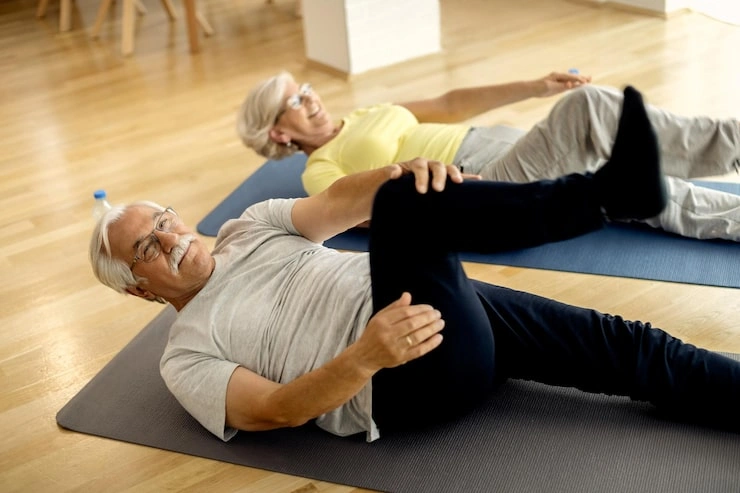
Lie on your back. Cross your right ankle over your left knee. Reach through your legs and grab your left thigh. Pull your thigh toward your chest. Feel the stretch in your right glute. Hold for thirty seconds. Switch sides. Cross your left ankle over your right knee. Pull your right thigh toward your chest. Hold for thirty seconds.
Common Mistakes To Avoid
Beginners make certain mistakes. These mistakes are normal. You will probably make them too. That is okay. Learn from them. Fix them. Move forward.
Going Too Fast
Speed does not matter. Form matters. Doing a squat fast does not make it better. Doing a squat correctly makes it better. Slow down. Control every movement. Feel your muscles work.
Holding Your Breath
People hold their breath during hard moves. This is natural but wrong. Holding breath raises blood pressure. It makes you dizzy. It tires you out faster. Breathe out during effort. Breathe in during release. For example, breathe out when you stand up from a squat. Breathe in when you lower down.
Skipping The Warm Up
You heard this earlier. It bears repeating. The warm up prevents injury. It makes your workout better. It takes five minutes. You cannot afford to skip it.
Doing Too Much Too Soon
Your body needs to adapt. Muscles need time. Joints need time. Tendons need time. Doing too much causes pain. Doing too much causes injury. Doing too much makes you quit. Start with one circuit. Do that for two weeks. Add a second circuit after. Add a third circuit later. Build slowly.
Ignoring Pain
Pain is different from burning muscles. Muscle burn means you are working hard. It goes away when you stop. Joint pain means something is wrong. Sharp pain means something is wrong. Stop immediately if you feel joint pain or sharp pain. Modify the move. Rest the area. See a doctor if pain continues.
You May Also Like: Fat Burning Workout For Remote Employees
How To Know If You Are Making Progress?
Progress happens over time. You will not see changes in one day. You will not see changes in one week. You need patience. You need consistency.
Keep a simple workout log. Write down what you did each day. Write down how you felt. Write down how many reps you completed. This helps you see progress.
Notice how you feel during the workout. Can you do more reps than last week? Can you do better form than last week? Do you need less rest than last week? These are signs of progress.
Notice how you feel after the workout. Are you less sore than last week? Do you recover faster than last week? These are signs of progress.
Notice how you feel in daily life. Can you carry groceries easier? Can you walk up stairs without getting winded? Can you stand longer without back pain? These are signs of progress.
Body changes take time. Weight loss happens slowly. Muscle definition happens slowly. Focus on how you feel. The body changes come later.
Frequently Asked Questions
Will low impact workouts help me lose weight?
Yes. Weight loss comes from burning calories. Low impact workouts burn calories. Not as many as running. But enough to make a difference. Combine these workouts with eating well. That combination leads to weight loss.
How many times per week should I do this?
Start with three days per week. Do Monday, Wednesday, Friday. Rest on other days. After one month, add a fourth day. Do Tuesday instead of resting. Keep building slowly.
Can I do this if I have knee pain?
Check with your doctor first. Most knee pain improves with low impact. Listen to your body. Stop if you feel sharp pain. Modify moves that hurt. Do smaller ranges of motion.
What if I cannot do all the reps?
Do fewer reps. Do five squats instead of fifteen. Do five push ups instead of ten. Build up over time. Something is better than nothing.
Do I need to do cardio too?
These workouts count as cardio. Your heart rate goes up. You breathe harder. You sweat. That is cardio. You can add walking on your rest days if you want. Walking is great low impact cardio.
How long until I see results?
You will feel results in two weeks. You will feel stronger. You will have more energy. You will move easier. Physical changes take longer. Give yourself three months to see body changes. Be patient.
Your First Week Plan
Here is a simple plan for your first week. It removes guesswork. It keeps you on track.
Day One - Monday
-
Five minute warm up
-
One full circuit with thirty second rests between moves
-
Five minute cool down
-
Total time around twenty minutes
Day Two - Tuesday
-
Rest completely or go for a fifteen minute walk
Day Three - Wednesday
-
Five minute warm up
-
One full circuit with thirty second rests between moves
-
Five minute cool down
-
Total time around twenty minutes
Day Four - Thursday
-
Rest completely or do gentle stretching for ten minutes
Day Five - Friday
-
Five minute warm up
-
One full circuit with thirty second rests between moves
-
Five minute cool down
-
Total time around twenty minutes
Day Six - Saturday
-
Rest completely or do fun movement like dancing or low impact workout for beginners at home
Day Seven - Sunday
-
Rest completely
Repeat this plan for two weeks. On week three, add a second circuit. Take one minute of rest between the two circuits. This increases your time to around thirty five minutes.
Final Thoughts
Starting exercise feels intimidating. You might feel nervous. You might feel unsure. You might feel like you cannot do it. These feelings are normal. They happen to everyone.
Low impact workouts solve these problems. They protect your body. They build strength safely. They give you confidence. They show you that you can do hard things.
The most important step is starting. The second most important step is showing up again. Consistency matters more than intensity. Doing a little bit regularly beats doing a lot once.
Your body is capable of amazing things. It wants to move. It wants to get stronger. It wants to feel good. These workouts help your body do what it wants.
Start today. Put on comfortable clothes. Clear a space in your living room. Do the warm up. Do the circuit. Do the cool down. Celebrate that you finished. Then do it again in two days.
You have everything you need. You have the knowledge. You have the plan. You have the power to change your life. Low impact workouts are your path forward. Take the first step now.